
Designing the Perfect Space Around Your In-Ground Swimming Pool
When homeowners think about adding an in-ground swimming pool, the focus is often on the pool itself — the shape, size, depth, or water features. But in reality, the area surrounding the pool has just as much impact on how the space looks, functions, and feels. The pool deck and surrounding outdoor living areas are what transform a swimming pool into a complete backyard retreat.
The right poolside design can create space for entertaining, relaxing, dining, sunbathing, and family gatherings while also improving safety and long-term durability. From hardscaping materials to landscaping and outdoor amenities, today’s homeowners have more options than ever when designing the area around their pool.
Here’s a closer look at some of the most popular choices for creating a beautiful and functional pool environment.
Concrete Pool Decks
Concrete remains one of the most common materials used around in-ground pools because it is durable, versatile, and cost-effective. Modern concrete pool decks are far more attractive than the plain gray surfaces many people imagine.
Stamped concrete can mimic the appearance of natural stone, brick, slate, or wood while providing a more affordable alternative. Homeowners can also choose from a wide variety of colors, textures, and finishes to match the style of the home.
Concrete is especially popular because it creates a seamless look and can easily accommodate curved pool designs. Textured finishes also help improve slip resistance, which is important for safety around wet surfaces.
One thing to consider in coastal climates is heat retention. Some darker concrete finishes can become hot under direct summer sun, so lighter colors are often preferred.
Paver Pool Decks
Pavers have become one of the most sought-after options for pool surrounds because they offer both beauty and flexibility. Available in concrete, natural stone, and brick varieties, pavers create an upscale, custom appearance that works with nearly any architectural style.
One major advantage of pavers is durability. Individual pavers can shift slightly without cracking, making them ideal for outdoor environments where settling may occur over time. If damage does happen, single pavers can usually be replaced without redoing the entire surface.
Pavers also provide excellent traction and stay relatively cool underfoot compared to some concrete surfaces. Popular choices include travertine, bluestone, and textured concrete pavers.
While pavers generally come with a higher upfront cost, many homeowners appreciate the long-term visual appeal and easier maintenance.
Natural Stone Surrounds
For homeowners looking to create a luxury resort-style atmosphere, natural stone is often the premium choice. Materials such as travertine, flagstone, limestone, and slate add texture, elegance, and organic beauty to pool areas.
Natural stone works particularly well in coastal, Mediterranean, tropical, and high-end outdoor living designs. Each piece has unique color variations and patterns, giving the space a custom, one-of-a-kind appearance.
Travertine has become especially popular around pools because it remains cooler underfoot and provides natural slip resistance. Flagstone offers a more rustic, earthy look that blends beautifully with landscaping.
The primary consideration with natural stone is cost. Installation and materials are typically more expensive than concrete or pavers, and some stone surfaces may require sealing or additional maintenance over time.
Wood and Composite Decking
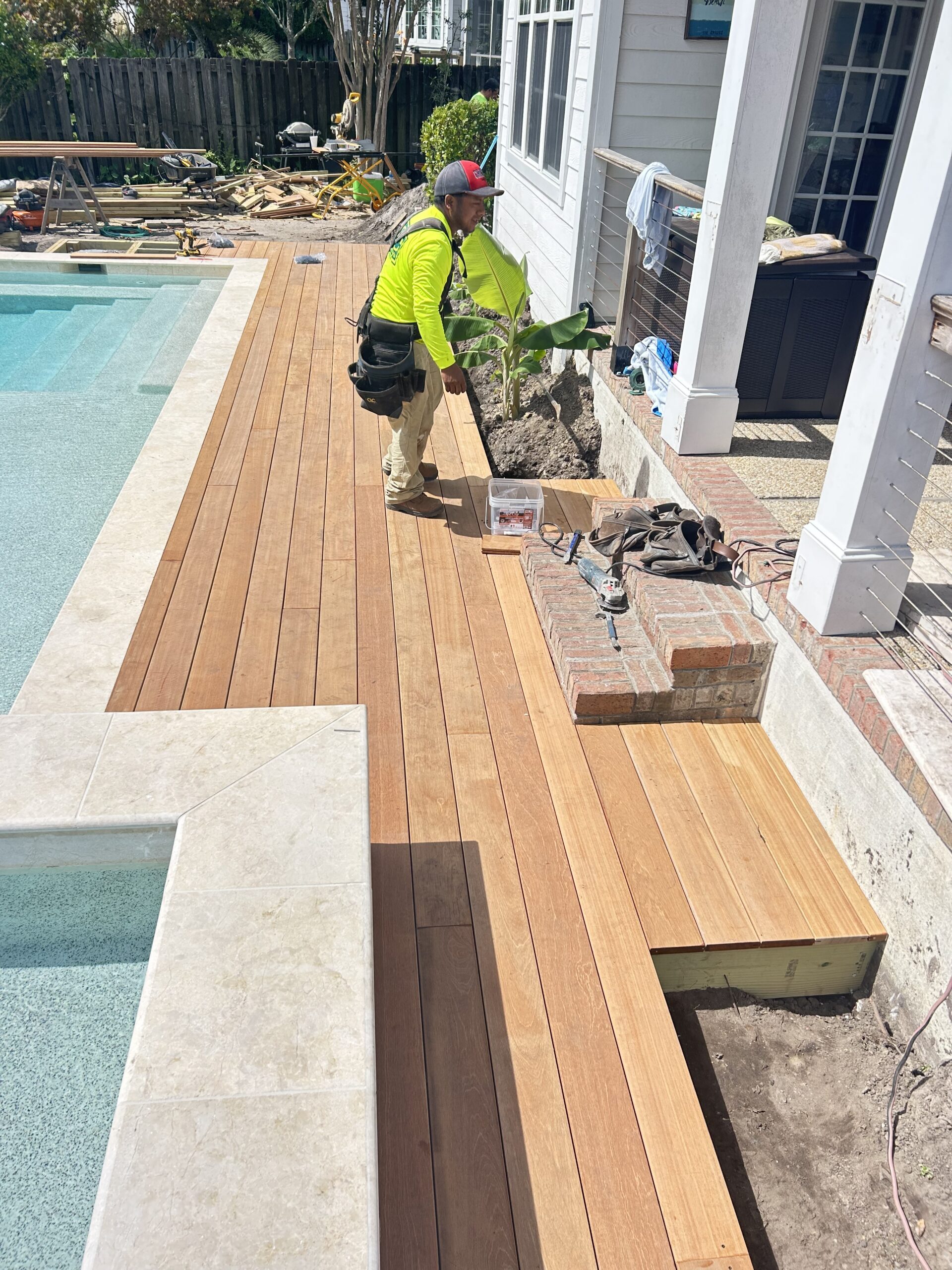
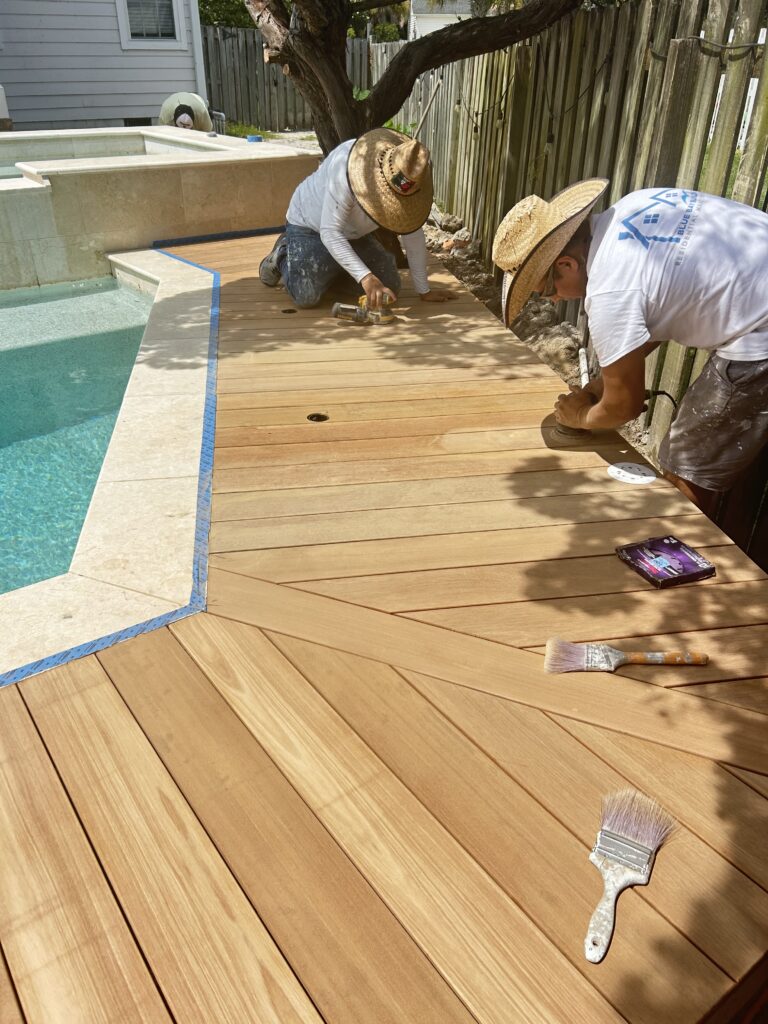
In some backyard layouts, particularly those with elevation changes or smaller footprints, decking may be the best option around a pool.
Traditional wood decking creates a warm, natural look that works beautifully with coastal and boho-inspired outdoor spaces. Cedar, redwood, and pressure-treated lumber are common choices, though they require regular staining, sealing, and maintenance.
Composite decking has grown significantly in popularity because it offers the appearance of wood with far less upkeep. Composite materials resist moisture, fading, splintering, and insect damage, making them especially attractive in humid coastal climates.
Decking is often used to soften the look of a pool area and create a more relaxed outdoor atmosphere.
Landscaping Around the Pool
Landscaping plays a major role in turning a pool area into a private oasis. Plants, trees, lighting, and decorative features can soften hardscape surfaces while adding color, privacy, and visual interest.
In coastal North Carolina, many homeowners incorporate palms, ornamental grasses, hydrangeas, jasmine, or native plants that thrive in the local climate. Tropical-inspired landscaping remains especially popular because it enhances the resort-like feeling of the space.
Privacy is another major consideration. Strategic landscaping can help block neighboring views, reduce wind, and create a more intimate environment around the pool.
Low-maintenance landscaping is often the smartest approach. Plants that drop excessive leaves, berries, or debris can quickly increase pool cleaning and maintenance requirements.
Outdoor Living Features
Modern pool areas have evolved far beyond lounge chairs and umbrellas. Many homeowners now incorporate full outdoor living spaces surrounding the pool.
Popular additions include:
- Outdoor kitchens and grilling areas
- Covered patios and pergolas
- Fire pits and fireplaces
- Built-in seating walls
- Poolside bars
- Outdoor showers
- Accent lighting
- Tanning ledges and sun shelves
- Cabanas and pool houses
These features help transform the pool area into a true extension of the home rather than a standalone backyard feature.
Creating multiple “zones” around the pool — such as dining, lounging, cooking, and conversation areas — can make the entire outdoor space feel more functional and inviting.
Safety and Practical Considerations
While aesthetics matter, safety and functionality should always remain top priorities. Slip-resistant surfaces, proper drainage, durable materials, and adequate walking space are essential for a successful pool design.
Shade is another factor many homeowners underestimate. The North Carolina summer sun can be intense, so covered seating areas, pergolas, umbrellas, or strategically placed landscaping can significantly improve comfort.
Maintenance expectations should also guide material choices. Some surfaces require more sealing, cleaning, or upkeep than others, and choosing low-maintenance materials can help preserve the enjoyment of the space over time.
Ultimately, the area around your pool is what defines the experience. A thoughtfully designed pool surround creates comfort, beauty, and functionality while turning the backyard into a destination for relaxing and entertaining throughout the year.
Ready to transform your outdoor space? Whether you’re planning a custom pool area, outdoor kitchen, patio, deck, or complete backyard retreat, the team at Blue Bay Builders is here to help bring your vision to life. Contact us today to discuss your project, explore design ideas, and receive a personalized quote. Your dream outdoor living space starts with a conversation.